Empowering the Next Generation of Tribal Wildland Fire Leadership
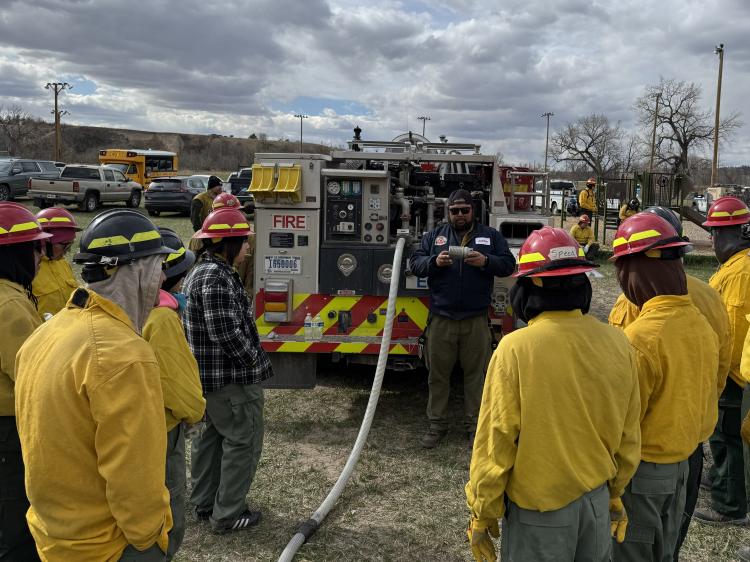
The Native Youth Firefighter Training Program is a partnership between the Bureau of Indian Education and the U.S. Wildland Fire Service that prepares Native students for careers protecting tribal lands and communities from wildland fire. Students gain foundational skills, nationally recognized certifications, and hands‑on experience, creating clear school‑to‑career pathways in public service and land stewardship. The program currently serves high school seniors and college students through dual‑enrollment opportunities with partner institutions. Instruction blends virtual coursework led by Wildland Fire Service fire professionals with on‑site facilitation by school instructors and culminates in a required field training day.
Students
What You’ll Learn
You’ll complete entry‑level wildland fire training aligned to national standards and earn NWCG certifications recognized across federal, tribal, and state fire programs. Course topics include:
- S‑130: Firefighter Training
- S‑190: Introduction to Wildland Fire Behavior
- L‑180: Human Factors in the Wildland Fire Service
- ICS‑100: Introduction to the Incident Command System
- IS‑700: Introduction to the National Incident Management System
Hands‑On Field Day
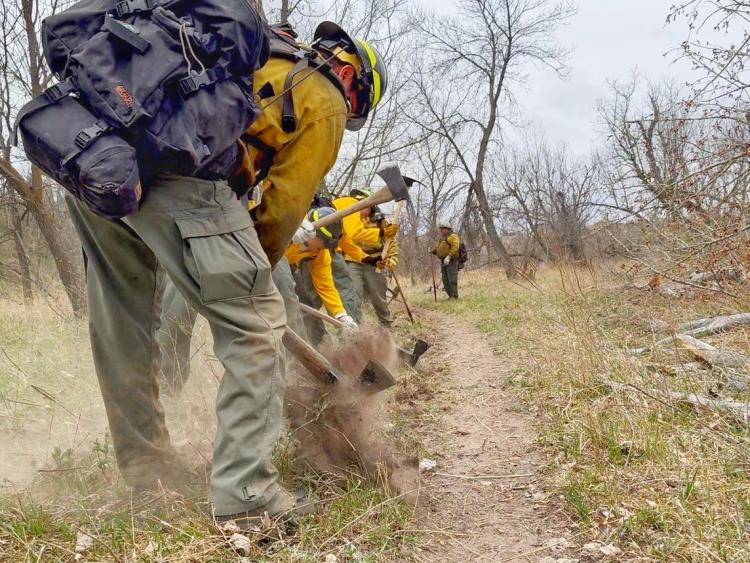
After finishing your online and classroom work, you’ll participate in a supervised field exercise where you apply new skills in a controlled scenario. The field day is an 8-hour requirement for both course completion and successful program completion.
Career Pathways
Graduates build a bridge to:
- Seasonal or permanent wildland fire positions with tribal, federal, and state programs.
- Advanced academies and apprenticeships for continued training.
- Leadership roles over time within Tribal and U.S. Wildland Fire Service fire management.
- Structured fire department opportunities for those pursuing municipal or structural firefighting.
College Credit & Dual Enrollment
BIE and the U.S. Wildland Fire Service have established working relationships with colleges regarding dual‑enrollment agreements. Students may earn CEUs or college credit that count toward degree programs.
Schools
Participation Requirements
BIE‑funded schools provide:
- An on‑site instructor/teacher to facilitate the curriculum and coordinate with USWFS fire professionals.
- Classroom space and internet access for students to log into the Wildland Fire Learning Portal.
- Student supervision to support completion of fire‑related coursework.
- Transportation to and from the mandatory field day.
Timeline & Planning
Recommended milestones prior to the semester start:
- 60 Days Out: BIE begins student recruitment and orientation scheduling.
- 45 Days Out: School identifies a primary point of contact.
- 30 Days Out: School submits site‑specific syllabus and final student roster to USWFS.
Instructional Model
USWFS provides curriculum, virtual instruction, and mentorship; the school supports daily facilitation, attendance, and program logistics. This blended approach leverages the Wildland Fire Learning Portal and other web‑based tools to deliver flexible, high‑quality training for students.
How to Enroll
School administrators should contact the program team to begin onboarding, set schedules, and coordinate field day planning.
Resources
Documents and Forms
- School Training Program Interest Form
- Student/Parent and Teacher Resources (including program flyers, FAQs and more)
Program Contacts
- Garth Fisher, Program Manager - U.S. Wildland Fire Service
- Blake Abbott, Program Coordinator - U.S. Wildland Fire Service
- Eric Ellison, Program Coordinator - U.S. Wildland Fire Service
- Carmelia Becenti, Chief Academic Officer - Bureau of Indian Education
Frequently Asked Questions
- Is there a formal application or enrollment process?
- Schools initiate enrollment by emailing the USWFS program contacts listed above. Students should coordinate through their school.
- Are there program costs for the school or tribe?
- USWFS provides curriculum, virtual instruction, and mentorship. Schools cover student travel for the field day and provide an on‑site instructor, classroom space, and internet access.
- What happens after completion?
- Graduates are eligible for seasonal fire positions, have access to advanced academies/apprenticeships, and can pursue long‑term leadership roles in tribal and federal jobs.
- How does this program benefit tribal communities?
- By investing in Native youth and honoring tribal values, the program builds capacity from within — preparing students to protect tribal lands and resources for generations to come.
- Where can we learn more about the partnership?
- See the BIE press release announcing the expanded training pathway and school‑to‑career focus.