CALAIS, MAINE — Maine Indian Education, a tribally controlled education agency serving three Wabanaki PK–8 schools, cut systemwide chronic absenteeism by roughly 37 points in three years and posted double-digit academic growth. They are among the most significant multi-year turnarounds in student attendance and academic achievement in comparable tribal school systems nationally.
“These results truly belong to the students, families, educators, and tribal leaders of the Penobscot Nation and the Passamaquoddy Tribe,” said Superintendent Dr. Reza Namin. “Serving Maine Indian Education is the privilege of a lifetime.”
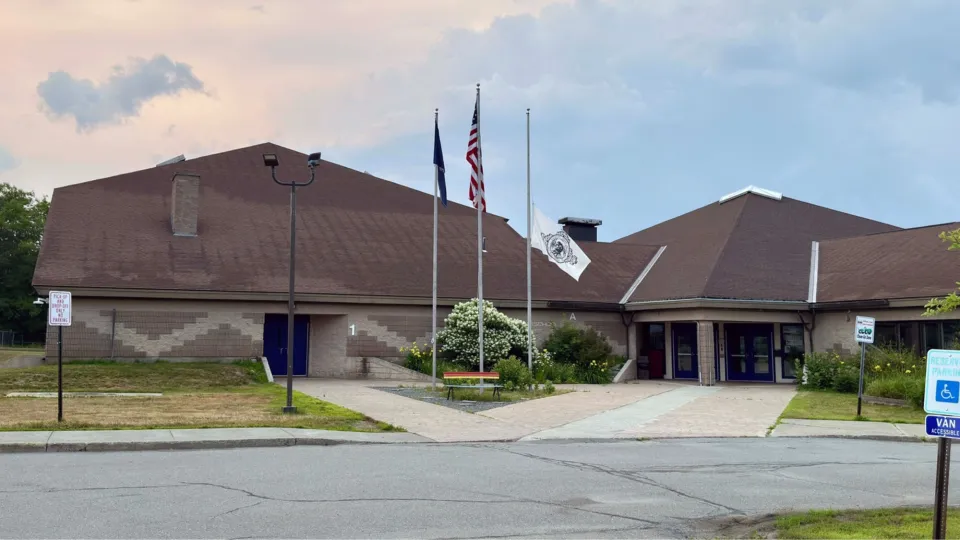
MIE serves Indian Island School (Penobscot Nation), Indian Township School (Passamaquoddy Tribe at Indian Township), and Sipayik Elementary School (Passamaquoddy Tribe at Pleasant Point). The schools are funded by the Bureau of Indian Education and operate under dual oversight by BIE and the Maine Department of Education. MIE’s recent results demonstrate what locally controlled, culturally grounded education can achieve.
A Multi-Year Transformation in Attendance
Drawing on the Maine DOE Chronic Absenteeism Detail Extract (2024–25), MIE has reduced systemwide chronic absenteeism to 19.6 percent, meaning roughly 80 percent of MIE students now meet the attendance goal – an improvement of approximately 37 percentage points from the 2021–22 estimated peak. The figure places MIE substantially below the national American Indian/Alaska Native benchmark and competitive with the Maine statewide average for all students.
|
School / System |
2021–22 |
2023–24 |
2024–25 |
| MIE System-Wide | 52–60% | 33–38% | 19.6% |
| Indian Island School | 55–62% | 28–32% | 13.1% |
| Sipayik Elementary School | 54–62% | 32–38% | 18.7% |
| Indian Township School | 58–68% | 38–44% | 27.0% |
| Maine Statewide (All Students) | 31.0% | 24.0% | ~24% |
| National American Indian/Alaska Native | 42–48% | 38–43% | 36–42% |
“What our schools have accomplished demonstrates the promise of tribal self-determination in education — that the best decisions for Wabanaki students are made closest to the communities those students call home, in partnership with the Bureau of Indian Education,” Namin said.
Indian Island School reached 13.1 percent chronic absenteeism – only 11 of 84 students – placing it below the Maine statewide average for all students and dramatically below the state’s American Indian student average of roughly 41.8 percent. Sipayik Elementary, at 18.7 percent, is approaching parity with the statewide average, and Indian Township School, at 27.0 percent, reflects a substantial multi-year improvement with targeted intervention continuing.
Double-Digit Academic Growth Across All Three Schools
The winter 2026 Maine Through-Year Assessment, administered in grades 3–8 in reading and mathematics, documented strong gains at every MIE school:
- Indian Island School: 90 percent of grade 7 students met or exceeded expectations in reading, and mathematics proficiency rose from 36 to 49 percent schoolwide in a single semester — a 13-percentage-point gain.
- Indian Township School: Grade 5 posted the highest single-grade gains in MIE’s recent history — +11.1 RIT points in math and +11.2 in reading in one trimester — with grade 4 reading rising nearly 18 percentile points (30th to 48th).
- Sipayik Elementary School: 64 percent of grade 3 students met expectations in both reading and math, with top performers across grades scoring 70th through 89th national percentiles.
Native American students have consistently registered the highest chronic absenteeism rates of any subgroup nationally. MIE’s improvements reflect sustained investment in culturally responsive instruction grounded in Wabanaki language, history, and traditions; partnerships with tribal leadership in each community; comprehensive data infrastructure; and rigorous compliance with both BIE federal authority and Maine Department of Education oversight.
National Recognition for MIE Leadership
Superintendent Dr. Reza Namin has also been named a 2026 Excellence in Power Leadership nominee by the National Association of School Superintendents and will be honored at its annual awards this October. The award recognizes superintendents whose vision, courage, and steady leadership have produced measurable results for students, staff, and communities. Dr. Namin is one of only 10 superintendents nationwide selected in the Districts Under 2,500 Students category. The nomination joins a growing list of honors recognizing his leadership, including:
- Nomination for 2026 Maine Superintendent of the Year
- Induction into the National Superintendents Association Hall of Fame
- Selection as a 2026 NASS Excellence in Power Leadership Nominee (Districts Under 2,500 Students)
Dr. Namin holds professional superintendent certification across multiple states and more than two decades of executive leadership experience, including service as Chief Academic Officer for the Commonwealth of Massachusetts. He earned three degrees from Worcester State University: a Ph.D. in Mathematics and Science Education; a Certificate of Advanced Studies in 3D Geometric Modeling from Brown University; and completed Post-Doctoral Studies at the Harvard Graduate School of Education, where he was named a Harvard University Graduate School of Education Fellow.
Contact
Office of Communications
Bureau of Indian Education Central Office
U.S. Department of the Interior
1849 C Street NW, MIB-3610
Washington, DC 20240
Telephone: 202-941-0789
Email: biecommunications@bie.edu