By Leonard G. Bailey II, Head of SIPI Culinary Arts Program
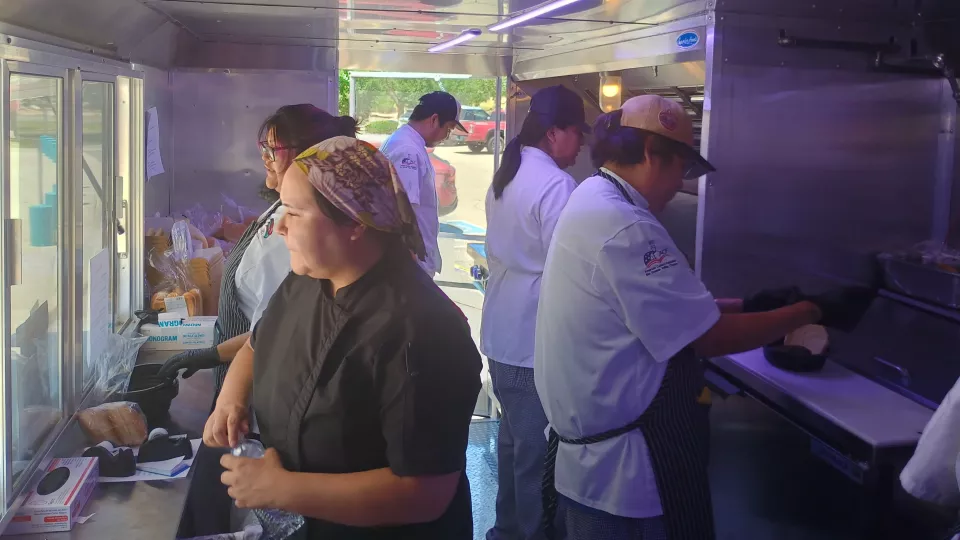
Students from the Southwestern Indian Polytechnic Institute Culinary Arts Program had the remarkable opportunity to prepare and serve traditional Indigenous cuisine at a Bureau of Indian Affairs tribal consultation held in Albuquerque, New Mexico. Under the direction of Chef Lauren Barker, students enrolled in SIPI’s food truck management course planned, cooked, and executed meal service for nearly 200 attendees, making the event an impactful hands-on learning experience in culinary execution and cultural preservation.
The event brought together tribal leaders, educators, and federal officials. SIPI students were tasked with preparing a menu that honored Native culinary traditions while demonstrating the food truck operations and service strategies taught in the classroom.
The featured menu included stew, hot dogs, hamburgers made with buffalo meat, red chili pork stew, freshly baked Pueblo pies, and three sisters’ salad. These dishes, rooted in regional tribal foodways, allowed students to work with ingredients such as bison, blue corn, red chili pods, and heirloom squash. Preparation began the day before, with teams organized around food prep, food safety, mobile kitchen setup, and customer service roles—all elements of the culinary arts curriculum.
“This event was an incredible opportunity for our students to take the lessons learned in the classroom and apply them in a real-world setting,” said Chef Lauren Barker, the lead instructor for the course. “They were able to work as a cohesive unit, learn time management under pressure, and appreciate the cultural responsibility of preparing traditional foods for tribal communities.”
Many students noted their pride in serving elders, leaders, and relatives from tribes nationwide. For several, it was their first time professionally cooking for such a large group. The food truck setting required adaptation to limited space, mobile equipment, and outdoor conditions, skillfully managed through teamwork and advanced planning.
The buffalo stew, slow-cooked with root vegetables and seasoned with wild herbs, was a favorite. Guests also praised the red chili pork stew, which showcased the students’ careful preparation of house-made red chili sauce using roasted pods and stone-ground spices. Pueblo pies, baked in small batches in traditional-style ovens, added a sweet and familiar touch to the meal.
In addition to culinary skills, students gained valuable insights into event logistics, inventory management, and public engagement – all essential components of operating a successful food truck business. Students demonstrated professionalism, attention to detail, and cultural respect.
“This wasn’t just about feeding people,” one student said. “It was about honoring traditions, learning to operate in a real food service environment, and representing SIPI with pride.”
The Culinary Arts Program at SIPI continues to prioritize experiential learning that blends technical proficiency with cultural awareness. Participating in these events provides professional development for students and meaningful service to the broader Native community.
The students’ success underscores the importance of culturally grounded education in culinary arts. As the culinary arts program expands its offerings and food truck curriculum, the lessons learned in this experience will inform future service-learning opportunities and help prepare students for careers in tribal enterprises, entrepreneurship, and community food systems.
Contact
Office of Communications
Bureau of Indian Education Central Office
U.S. Department of the Interior
1849 C Street NW, MIB-3610
Washington, DC 20240
Telephone: 202-941-0789
Email: biecommunications@bie.edu