Title IV, Part B: Nita M. Lowey 21st Century Community Learning Center – CFDA 84.287
This discretionary grant program supports the creation of community learning centers (school programs) that provide enrichment opportunities during non-school hours for children, particularly students who attend high-poverty and low-performing schools. Currently sixty (60) BIE 21st CCLC centers offer 21st Century programming that helps students meet state and local student standards in core academic subjects, such as reading and math. It also offers students a broad array of enrichment activities that can complement their regular academic programs as well as literacy and other educational services to the families of participating children.
A new 21st CCLC grant competition will be announced in late 2024, with a new competition held in early 2025 and awarded in summer 2025 to begin SY25-26.
21st Century Resources
- 21st CCLC Annual Report - SY22-23 (2.67 MB)
- 2025 21st CCLC Grant Awards (183.96 KB)
Contact
Casey Sovo
21st CCLC BIE State Co-Coordinator
casey.sovo@bie.edu
Indian Education Formula Grants – CFDA 84.060A
This program addresses the unique cultural, language, and educationally related academic needs of American Indian and Alaska Native students, including preschool children. The programs funded are to meet the unique cultural, language, and educational needs of Indian students and ensure that all students meet the challenging State academic standard. The program is the Department's principal vehicle for addressing the needs of Indigenous students.
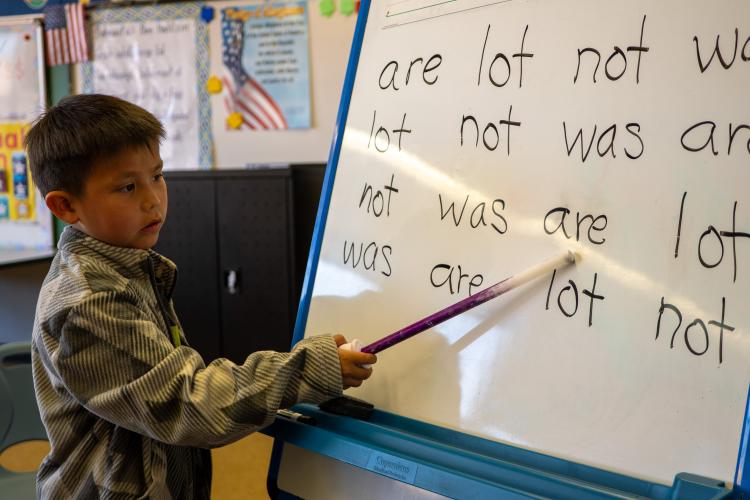
Types of Projects — Grant funds supplement the regular school program by meeting the culturally related academic needs of Indian children. Projects help Indian children sharpen their academic skills, assist students in becoming proficient in the core content areas, and provide students with an opportunity to participate in enrichment programs that would otherwise be unavailable. Funds support such activities as culturally responsive after-school programs, Native language classes, early childhood education, tutoring, and dropout prevention.
Additional Information — The Indian Education Formula Grant program supports local educational agencies in reforming elementary and secondary school programs that serve Indian students. Annually, each applicant develops and submits to the Department a comprehensive plan to meet the needs of Indian children. Applicants must develop this plan in collaboration with a local committee comprised primarily of parents and family members of Indian children and must include student performance goals, a description of professional development activities that the applicant will carry out, and an explanation of how it will assess students’ progress toward meeting its goals and will provide the results of this assessment to the parent committee, Indian community, and tribes whose children are served by the LEA.
Region 13 Comprehensive Center Network—The RG13 Comprehensive Center provides technical assistance and professional development to the SEP office, improving education results and compliance for supplemental programs to ensure quality support and services.
Comprehensive Literacy State Development Program – CDFA 84.371C
The Comprehensive Literacy State Development program is authorized under Sections 2222-2225 of the Elementary and Secondary Education Act. The purpose of the CLSD discretionary grants is to create a comprehensive literacy program to advance literacy skills, including pre-literacy skills, reading, and writing, for children from birth through grade 12, with an emphasis on disadvantaged children, including children living in poverty, English learners, and children with disabilities.
Furthermore, applying entities must partner with one and no more than two early childhood providers and coordinate program efforts from elementary through high school to sustain a continuous feeder program structure.
The Comprehensive Literacy State Development National Literacy Center website includes evidence-based practices, tools and recommendations for practice, news about professional learning events, and other helpful information for your work.
Resources
- CLSD Guidance Document (473.75 KB)
- CLSD State Literacy Plan (516.51 KB)
Contact
Cheryl Johnson, M.Ed., M.A (Diné)
CLSD BIE State Coordinator
cheryl.johnson@bie.edu